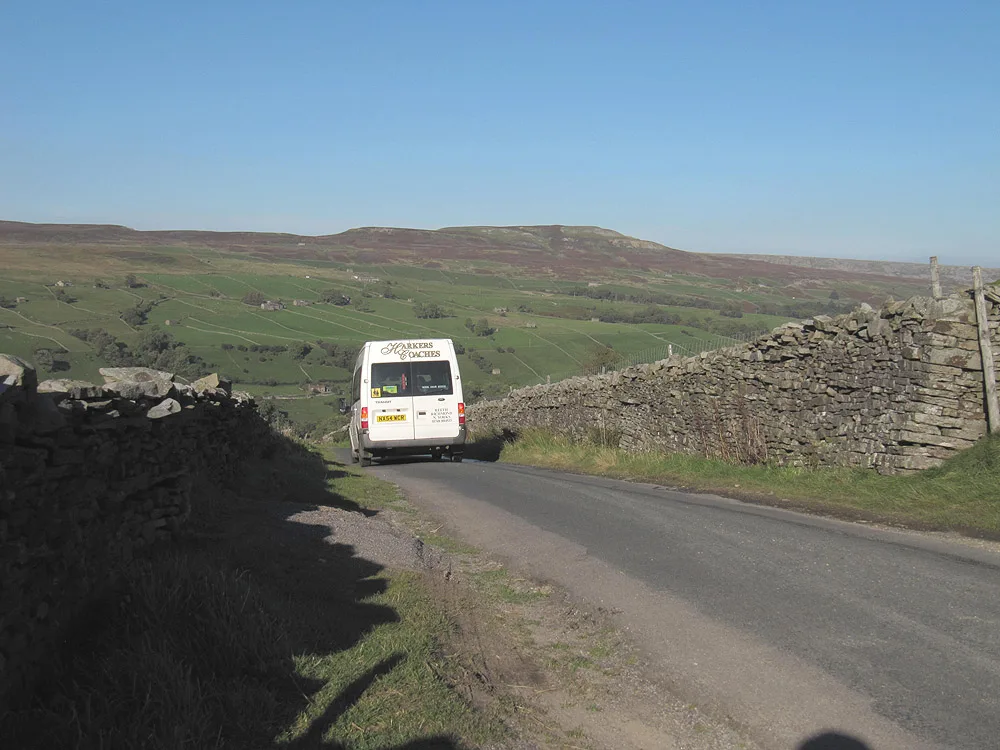

The council's review keeps the nearest-school rule: 515 fewer Year 7 pupils qualify, five Dales routes leave the maps and a consultation is due this autumn.
North Yorkshire Council’s review of its 2024 school transport policy recommends keeping the nearest-school rule that replaced catchment-based free travel. It also proposes new discretion for families whose nearest school sits at the end of an unreasonable road, and it strikes five upland routes, including Buttertubs Pass, out of the council’s route maps.
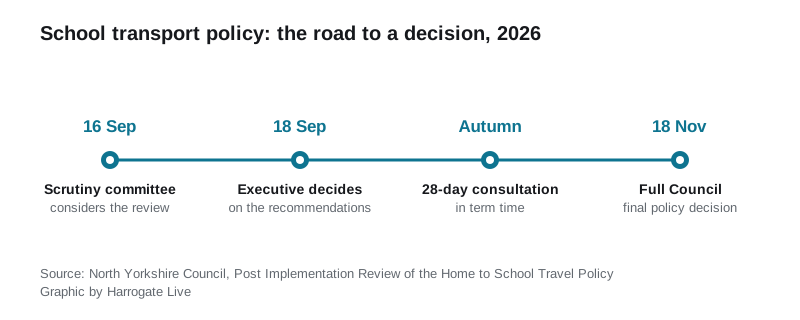
The Post Implementation Review goes to the Children and Families Overview and Scrutiny Committee on 16 September, then to the Executive on 18 September. If the Executive backs the policy changes, a 28-day consultation in term time follows, with the final decision at full Council on 18 November.
What the review found
The 2024 policy tied free transport to the nearest suitable school rather than the catchment school, and its first full year of data shows a sharp effect:
- 515 fewer Year 7 pupils qualify. 1,534 Year 7 pupils were eligible in 2023/24, 26.1% of the cohort. By 2026/27 that is 1,019 pupils, or 18.1%.
- Reception eligibility fell more gently, from 266 pupils (5.1%) to 217 (4.3%).
- Across both cohorts, eligible pupils fell 31.3% while pupil numbers fell only 3.2%, so the drop is the policy, not demographics.
- The review concludes the policy is compliant with government guidance and on track for its savings, booked at £3m a year in the council’s budget once a seven-year transition completes.
The backdrop is cost. Home to school travel is projected to cost the council £54.5m in 2026/27, or £299,000 every school day, up from £42.7m in 2023/24.
What would change
The review makes 24 recommendations. The ones that change the policy, and so need full Council approval in November, include:
- Discretion to fund travel to the next-nearest school where it would be unreasonable for a vehicle to use the road to the nearest one, and the road route there is more than 2 miles longer than the route to the next school.
- Discretion to disregard unreasonable routes, or parts of them, when working out which school is nearest, and to remove routes rejected at appeal from the system permanently.
- Five roads removed from the route maps on local knowledge: Fleet Moss Road, Keld to Kirkby Stephen, Buttertubs Pass, The Stang and Kidstone Pass.
- Clearer wording on how school entrance points are used to measure distances, and confirmation that no child eligible on distance grounds is expected to walk.
Operational changes the Executive can approve on 18 September include 30 days’ notice before a paid travel permit is withdrawn mid-year, and strengthened first-stage appeal panels with guidance to apply discretion in exceptional family circumstances.
What is not changing: the nearest-school rule itself, the removal of free transport to faith primary schools and second addresses, and the extended offer for low-income families, who can get transport to one of their three nearest schools between 2 and 12 miles away.
Appeals and the Ombudsman
The policy has been fought hardest through appeals. The council logged 275 first-stage appeals between March 2025 and February 2026, and 196 of them were families asking for transport to a catchment school that was beyond walking distance but not the nearest. Of 56 second-stage appeals heard in 2025/26, 10 were upheld in some form.
Twenty-one complaints have reached the Local Government and Social Care Ombudsman. In seven cases the Ombudsman found fault in how the council publicised the new policy but no personal injustice. In five cases it found fault and injustice, and the council was told to rehear the appeals; two were then upheld. Three of the complaints related to Ripon Grammar School, the most of any school, and complaints also related to Harrogate Grammar School.
Feedback in the review repeatedly questioned the walking-route data used to decide the nearest school, the safety of routes treated as walkable, and the effect on pupils with grammar school places in areas without public transport.
What it means for you
Nothing changes for this school year. Eligibility still rests on the nearest suitable school: free transport if it is over 2 miles away for a child under 8, or over 3 miles for a child aged 8 and over.
If the Executive agrees the changes on 18 September, the consultation is the moment to comment, particularly if your child’s nearest school sits down a road you consider unusable. It runs for 28 days in term time, this autumn, before the November Council meeting.
The scrutiny committee also hears a separate Notice of Motion on the policy referred from July’s full Council, and reports back to the same 18 November meeting. The council waived its usual call-in period to fit the consultation in before then, under an urgency notice signed on 4 September.
Have your say