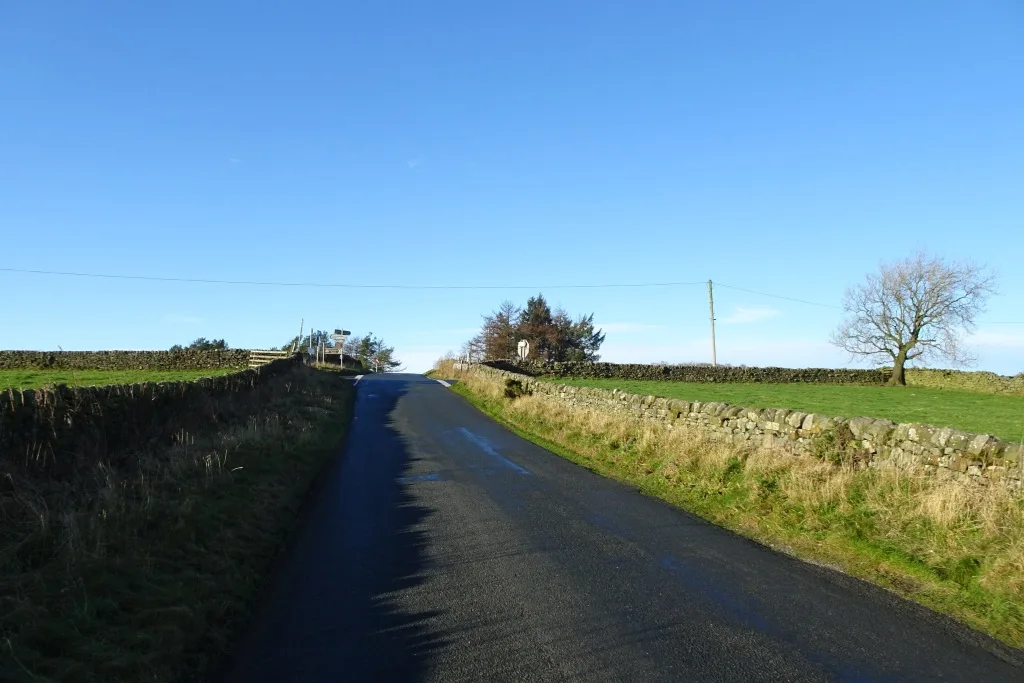

Warsill Road, Hartwith Bank and Lower Norwood Road are all recommended for refusal. Only one of the county's 14 gritting requests is backed, and it is near Northallerton.
Three roads in the Harrogate area were put forward for winter gritting this year. Officers have recommended refusing all three. The decision is taken on Wednesday 26 August at 9am, by the Corporate Director of Environment in consultation with the executive member for highways (agenda).
All three requests came from residents, not from councillors or parish councils. All three are in upper Nidderdale and the Washburn valley, where roads sit high, drift with snow and hold ice long after the towns have cleared.
The three roads
North Yorkshire Council’s highways area 6, which covers Boroughbridge and Harrogate, received three requests. All three are Priority 3 roads, the lowest category the council uses. From the council’s appendix of individual requests:
- Warsill Road, near Pateley Bridge. 5.6km of upgrade, 22 salt heaps on it now. Recommended: No.
- Hartwith Bank and Brimham Moor Road, Summerbridge. 5.2km, 39 salt heaps. Recommended: No.
- Lower Norwood Road, running from Norwood Hall down to Norwood Bottom, with Jack Hill and Brat Lane. 3.7km, 62 salt heaps. Recommended: No.
The officer wording is close to identical in all three cases: the priority “remains as it is, because the current level of treatment is in line with the Council’s policy and is consistent with the approach elsewhere in the County”.
That policy matters, because Priority 3 is close to no treatment at all. The report states plainly that Priority 3 routes “will not normally receive treatment unless freezing conditions persist for more than 72 hours”.
One request in the county is backed, and it is not here
Fourteen requests came in across North Yorkshire for the 2026/27 season, spread across seven highways areas: three from the Brompton on Swale area, two from Thirsk, four from Whitby and Scarborough, none from Kirby Misperton, one from Skipton, three from ours, and one from Selby.
Officers support exactly one of the fourteen. It is at North Cowton, a village near Northallerton, where an existing Priority 2 route would be extended by about a kilometre to take in the road from the B1263 and the roads round the village green, which the school buses use. The report prices it at “less than £5 per gritting run”, set against a winter service budget of £8,594,700.
That is the comparison worth holding on to. The three local roads were not turned down on cost. Nothing in the report puts a price on any of them. They were turned down on the road hierarchy: they are minor roads, and the policy treats minor roads the same way everywhere in the county.
What the residents said
The requests are published in full, with names removed. One came from a livestock keeper who lives in Fewston and rents land at Warsill:
In January this year, I was unable to check the flock for two weeks due to the inaccessibility.
The same request notes that checking stock every 24 hours is a legal requirement. The Lower Norwood Road request describes “4 areas where the road is dangerous and impassible due to sheet Ice” and the same problem reaching livestock. The Hartwith Bank request is about school transport, and argues that drivers brought in from outside do not know how these lanes behave in winter.
Officers’ answer, in each case, is the salt heaps: 22 on Warsill Road, 39 on Hartwith Bank and Brimham Moor Road, 62 on Lower Norwood Road. The report adds that officers “will check the number and spacing of grit heaps and bins on each of the routes in this report before the start of the winter season”.
A comparable request elsewhere in the county gives a sense of how well that works in practice. A resident on a Priority 3 road in Swaledale told the council the heaps on their road were empty, that there were too few of them, and that “manual spreading by residents is not a substitute for the mechanical gritting required to make a road safe for a school bus”. That request was also refused.
Your councillor was not asked
One line in the report is worth reading twice. On local member engagement, it says there has been “no prescriptive or direct local member engagement as part of this report being compiled”, and that local members “can be notified following this meeting”.
In other words, the councillors for Nidderdale, Washburn and the surrounding divisions are not part of the process that produced these recommendations, and are due to be told afterwards. The requests themselves came from residents, so no parish council or ward member has spoken for these three roads on the record.
What it means for you
If you live on one of these roads, or on any Priority 3 lane in the district, the practical position for this winter is unchanged. Some things you can act on now, before the season starts:
- Salt heaps and bins are refilled by 1 November, with a second refill possible mid-season or after heavy snow (council salt bins page).
- Report an empty or damaged one online. The council changed its reporting system on 15 July 2026, so an old account will not work and anything you reported before that date sits in the previous records.
- A parish council can buy its own bin. The salt bins page quotes £50 for a bin and £75 a year for up to two refills. The community gritting partnerships page quotes £51.70 and £77.55 for the same thing. The council does not explain the difference, so check the figure before budgeting for it.
- A village can grit its own roads, through a community partnership. Salt costs £155.10 a tonne delivered in October, routes are agreed with the local highways office in advance, and the group needs £5 million public liability and £10 million employer’s liability cover.
- Gritting is not a guarantee. The council’s own road gritting page says salt alone does not melt snow and ice, and that traffic has to drive over a gritted road to work the salt in. On a quiet moorland lane, that traffic may not come.
The gritter tracker on that page only shows activity when crews are actually out, so it will look empty until the cold arrives. Crews are on call from October.
For what is shut on the roads right now, see our Harrogate roadworks and travel page.
Sources
- Annual Winter Gritting Route Requests and Proposed Changes in advance of 2026/27 Season, report of the Assistant Director for Highways and Infrastructure, dated 11 August 2026
- Appendix A: individual changes to gritting routes received by the area offices (the three area 6 requests, salt heap counts, officer recommendations, and the council’s own location drawings A6-25/26-001 to 003)
- Agenda: Environment Directorate, Corporate Director and Executive Member for Highways and Transportation, 26 August 2026
- Salt bins and salt heaps, community gritting partnerships and road gritting, North Yorkshire Council
Have your say