
North Yorkshire Council's Lifeline shake-up cuts the Harrogate weekly charge from £8.37 to £6.51 but ends monthly wellbeing visits for 171 local users. Three months' notice, then a new agreement.
Harrogate’s council-run Lifeline pendant alarm is being folded into a single North Yorkshire service with one weekly charge, and the change is now in force. The standard Harrogate price falls from £8.37 a week to a countywide £6.51 plus VAT, which most users do not pay. The monthly wellbeing visit that 171 Harrogate customers currently receive under the £10.75 premium package is replaced by one visit a year, and the council will not send its own staff to a fall.
The decision was taken by the council’s Corporate Director of Community Development on 22 June 2026, in consultation with the Executive Member for Culture, Arts and Housing, and published on 1 July. Six opposition councillors called it in. On 20 July the Housing and Leisure Overview and Scrutiny Committee voted seven to six not to refer it to full council, at which point the decision took immediate effect.
What Lifeline is, and who uses it in Harrogate
Lifeline is the council’s community alarm for people living in their own homes: a base unit and a pendant worn on the neck or wrist, connected to a 24-hour call centre. It is not a care service. It is separate from the telecare that Health and Adult Services commissions from Medequip for people with assessed care needs, and separate again from the wardens at sheltered housing schemes.
The service the council inherited from Harrogate Borough Council in 2023 has two tiers, and as of today the council’s own Harrogate Lifeline page still lists them with no notice of any change: Standard at £8.37 a week (pendant, unit, installation, an independent living officer to call, 24-hour emergency response) and Premium at £10.75 a week (all of that plus “monthly personal wellbeing checks or weekly wellbeing phone calls” and equipment testing). A 28-day short-term package costs £42.96.
The council’s response to the call-in gives the local numbers. In the Harrogate area 171 customers are on monthly visits or weekly calls and 416 are on annual visits, 587 in all. Harrogate’s calls are currently handled by Careium, and the report says that contract is “in the process of transferring to Tunstall”, which handles the rest of the county.
What changes
The decision report sets out a “Community Lifeline” offer for everyone in North Yorkshire:
- 24/7 emergency call handling, equipment and administration at one price. The report’s charging table gives £6.56 a week; the council’s later written response to the call-in, and the officers who presented it on 20 July, put it at £6.51 plus VAT. Both are below Harrogate’s current £8.37, and well below the £10.75 premium rate. Most customers are VAT-exempt on medical grounds.
- One “complimentary wellbeing visit per annum” from a Healthy and Sustainable Homes caseworker, covering equipment testing plus energy efficiency, crime prevention, falls risk, fire safety, isolation and housing conditions. Monthly and quarterly visits end.
- Installation, repairs and maintenance through the council’s Handyperson service rather than Lifeline officers.
- No council responder to a fall. The report says “lifting support will cease” and that responder provision is being withdrawn as a standard element of the service.
Existing agreements will be terminated on three months’ notice and customers invited to sign a new one on the reduced terms. During that transition, “where capacity allows”, staff will keep doing reassurance visits in office hours.
Why the council says it is doing this
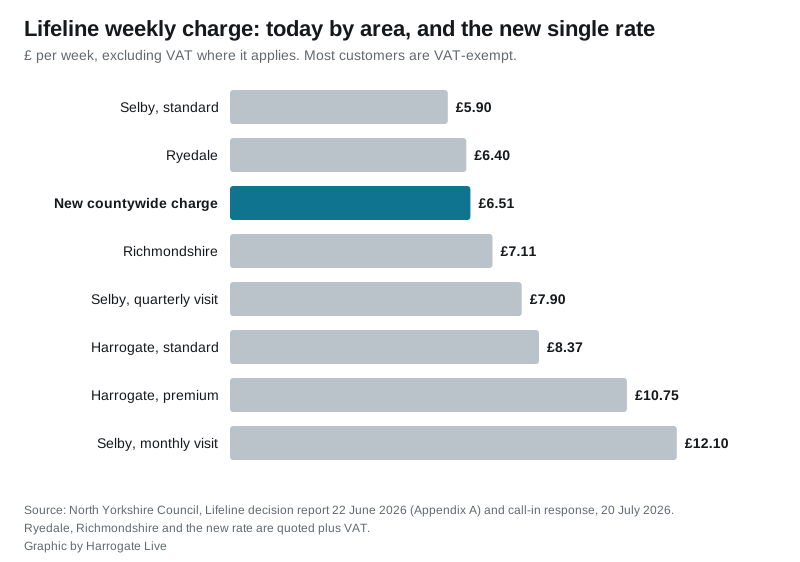
The report’s case is that the service it inherited from the district councils in 2023 is a patchwork. Richmondshire includes monthly visits in its standard charge, Selby sells them as an extra at £6.20 a week (four customers have taken it), Harrogate sells them at an extra £2.38, and Ryedale does not offer them. Selby and Richmondshire have wardens who attend falls with lifting equipment; Harrogate does not. The current charging appendix shows the spread: Selby £5.90 a week standard, £7.90 with a quarterly visit and £12.10 with a monthly visit; Ryedale £6.40 for the unit plus VAT; Richmondshire £7.11 plus VAT with 83p per extra sensor; Harrogate £8.37 and £10.75.
That last point matters for reading the coverage elsewhere. In the Harrogate area, the report says, “all falls are referred directly to the Ambulance Service, with any local responders notified where appropriate, but Council staff are not called to attend falls.” Outside core hours over a 12-month period there were 11 warden call-outs here and eight occasions when wardens were unable to attend. So the loss of a warden responder service, the headline change in Selby and Richmondshire, is not a change most Harrogate users will notice. The change here is the visits.
Officers costed the alternative. Giving every customer in the county a monthly visit would need roughly £765,000 a year in extra staff, about 17 full-time posts, and would take the weekly charge from £6.51 to about £13.55 plus VAT if the council did not subsidise it. The report also says the current charges “do not fully reflect the true cost of operating a resilient responding service”, and that the aim is a service that neither it nor sheltered housing subsidises from 2027/28.
The other driver is the analogue telephone switch-off in January 2027. The rollout of digital Lifeline units across the county is described as “progressing well” and expected to be “substantially in place by late autumn”.
The call-in
The councillors who called the decision in listed five concerns: the service reductions, the impact on older and disabled residents, the increase in charges, the limited consultation, and the equality impact assessment. On consultation the council’s answer is blunt: because Lifeline is a discretionary service, “no formal public consultation was undertaken”. The equality screening concluded a full assessment was not required.
The named vote on referring the decision to full council was six in favour (Councillors Packham, Cattanach, Walker, Foster, Parsons and Shaw-Wright) and seven against (Trumper, Dickinson, Lunn, Pearson, Swiers, Peacock and White). Councillor Chris Aldred, attending as a substitute, had signed the call-in and so was ruled ineligible to vote. The committee then endorsed the decision by seven to six.
What it means for you
- If you pay £8.37 for the standard Harrogate service, the alarm, the pendant and the 24-hour response stay, and the price should fall by £1.86 a week once you sign the new agreement. Check whether VAT applies to you; most people with a long-term illness or disability are exempt.
- If you pay £10.75 for the premium service, the monthly visit or weekly call ends after the notice period. You get one wellbeing visit a year instead. Nothing in the report offers a paid-for monthly visit as an option in Harrogate.
- Falls. Nothing changes for Harrogate users in practice: the call centre already sends the ambulance service, not a council warden. If you need help getting up after a non-injury fall, that is a conversation for adult social care and the Medequip telecare service, which is assessed rather than bought.
- Notice. You should receive a formal letter giving at least three months before the old agreement ends. If someone in your family is on Lifeline and does not open post reliably, that letter is the one to look for.
- The council’s public page has not caught up. Until it does, the decision report and its charging appendix are the record of what has been agreed.
Related on this site: Harrogate house prices, things to do in Harrogate, Harrogate planning news.
Have your say