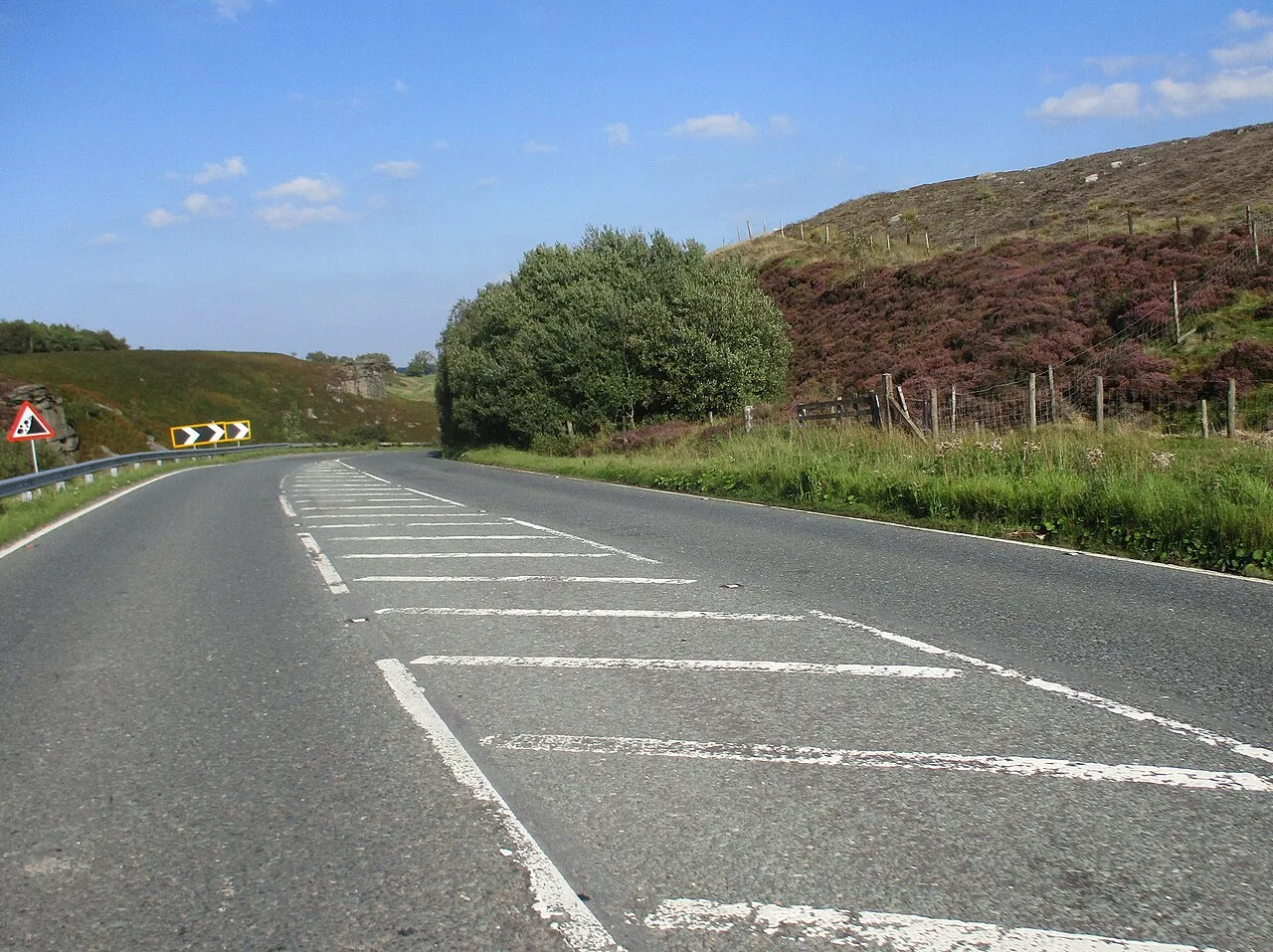

The new A59 at Kex Gill opened on 25 August, about eight weeks after the date the council's executive was given. Two of the three lanes are open, at 30mph.
Update, 7 September 2026: the road opened. North Yorkshire Council announced on Tuesday 25 August that the majority of the new 4.2km route was carrying traffic that day. A 30mph restriction applies and two of the three lanes are in use, the third being a crawler lane, while the tie-ins to the old road and the landscaping are finished. That is about eight weeks after the late June 2026 opening the council’s executive was given in May 2025. The account below is the story as we published it on 14 August, before the opening was announced. For what is shut around Harrogate now, see our roadworks and travel page.
The main section of the new A59 at Kex Gill will open to traffic “in the next few weeks, by early September”, North Yorkshire Council said on 13 August. That is roughly ten weeks later than the opening date its own executive was given last year when it signed off the final £11.7 million for the scheme.
Only part of the road opens. The council’s statement says the majority of construction is finished, “with only the tie-ins to the existing road network and the completion of road markings remaining”, and that “once finished, this will enable two of the three carriageways to open to traffic”. Work continues on the eastern and western connections to the existing road, on a redesigned junction at Church Hill, on access around Fewston Reservoir and on landscaping.
The new road is 4.2 kilometres long and replaces the stretch of the A59 between Harrogate and Skipton that keeps moving. Since 2000 that section has suffered 15 landslips, costing more than £6 million in repairs and closing the road repeatedly.
“For decades, this stretch of road has been vulnerable to landslips, leading to costly repairs, lengthy diversions and significant disruption for local communities, businesses and visitors,” said Cllr Malcolm Taylor, the executive member for highways and transportation. “This is the largest highways project ever undertaken by North Yorkshire Council.”
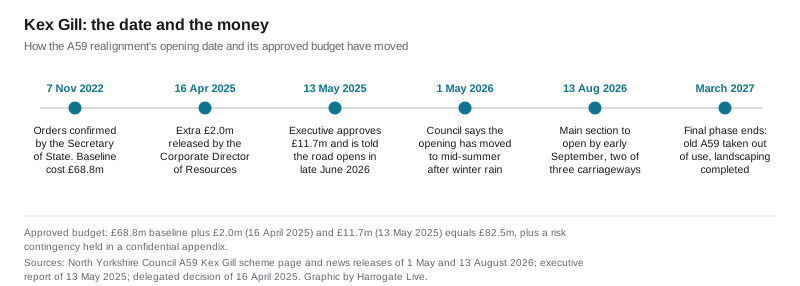
What the council’s own papers say about the date
The last full public account of the timetable went to the council’s executive on 13 May 2025. That report said the scheme had “a main works programme duration of 14 months to run under a sectional completion phase, targeting new road opening in late June 2026, followed by a final completion phase to extinguish the existing affected A59 and carry out landscaping through to March 2027”.
Late June came and went. On 1 May the council said the road would open in mid-summer rather than the early summer it had hoped for, blaming prolonged heavy rain between December and February. The date now given is early September. The March 2027 end point for the final phase, when the old road is taken out of use and the landscaping is completed, has not been revised in public since that May 2025 report.
The money: £68.8m became £82.5m
The scheme was set up with a baseline cost of £68.8 million, made up of a £56.1 million Department for Transport grant and £12.7 million of council capital, according to the council’s scheme page. Two decisions in the spring of 2025 added to it:
- £2.0 million, approved by the Corporate Director of Resources on 16 April 2025 as an urgent release of funding.
- £11.7 million, approved by the executive on 13 May 2025 from the Capital Supply Chain Reserve, “plus an allowance for a further risk contingency funding as described in confidential appendix A”.
That takes the approved budget to £82.5 million, with the extra contingency held in a confidential appendix and so not on the public record. The May 2025 report set out where £6.439 million of contractor compensation had already gone: £2.080 million on a design change from “a piled solution to an earth-reinforced embankments solution”, £2.463 million on contract change and the delay to the Department for Transport’s full business case approval, £1.728 million on earthworks where “poor ground has been encountered in several locations across the site, which has required removal and replacement”, and £0.168 million on smaller events.
What it means for you
Do not plan a September trip to Skipton around the new road until the council confirms the opening. The date is “by early September”, not a fixed day, and the two carriageways that open are not the finished article: the Church Hill junction is still being rebuilt, and the tie-ins at each end are the last pieces of construction. Expect traffic management at the joins for some time after the main section takes traffic.
For anyone who has sat in a Kex Gill diversion, the practical gain is reliability rather than speed. The point of moving the road to the northern side of the valley is that the hillside under the old alignment keeps slipping, and each slip has meant weeks of closure and a long detour. Check live closures on the council’s roadworks map before you set off, and see our Harrogate roadworks and travel page for the other schemes running across the district this summer.
The scheme also leaves something behind on the moor. More than 12,700 native trees have been planted, along with wildflower planting, balancing ponds and habitat creation, and four kilometres of natural stone walls in keeping with the Nidderdale National Landscape. New routes for walkers, cyclists and horse riders form part of the works. The orders that made all of it possible were confirmed by the Secretary of State for Transport on 7 November 2022.
Have your say